Sony EA 50UH – A Hybrid Camcorder – DSLR

Sony EA50 Reviewed
I finally pulled the trigger on the new camera Sony NEX EA 50UH. This is a preliminary review since I am still learning the camera. First, the camera has a 16 megapixel APS-C sensor very similar to Sony’s mirrorless line of still cameras, nearly as big as the Super 35mm sensor.
The Pros
I was looking for a camera under $4000 (mine was $3425 with automatic discount from B&H including power zoom 18- 200 lens.) I’d wanted a DSLR-type large image sensor in a camcorder. I do documentaries and despite what some say, I just don’t find DSLRs ideal for docs.
Also I loved the idea of interchangeable lenses like every DSLR has. There are adapters for sale for Canon, Nikon, and other lenses which convert to the Sony E mount on the camera. The catch is that not all electronic lens functions are working yet in some adapters, but manufacturers are sure to fill that gap. There are, for instance, lenses from Rokinon/Samyang that are affordable and use the Sony E mount without adapters:
14mm T3.1 Cine Lens for Sony E
24mm T1.5 Cine Lens for Sony E
35mm T1.5 Cine Lens for Sony E
85mm T1.5 Cine Lens for Sony E
They’re new and available now.
And the included XLR inputs are a must in my list.
Another plus is the viewfinder tube or eye loupe much like the Sony EX3 (which costs about twice this camera). This long viewfinder tube is great for shooting outside or in a bright location where an LCD would wash out. Like DSLRs the aliasing is an issue, but according to Jerome Cloninger another EA 50 owner who also loves his Canon 60D, the moire and aliasing are not nearly as bad as any Canon DSLR in video mode. I’ve seen very little of either in my tests so far. I haven’t yet explored the 16.1 megapixel still camera that is part of this camera.
In addition the camera will produce 4:2:2 which is the color sampling format used by most professional formats. This is via the HDMI port of the camera if you use an external media recorder. This avoids the AVCHD recording which is 4:0:0 colorspace. You can simultaneously record to both a memory card in AVCHD and to the external recorder in 4:2:2. The 4:2:2 provides a very clean key for green screen shooting. The Sony HXR-FMU128 flash memory recorder can record more than 12 hours at 24Mbps and 10 hours at 28Mbps. It’s $639.00. I’ll try this as soon as budget permits, but it sounds promising.
The camera can shoot in either 50Hz or 60Hz systems so you can shoot for anyone in the world with this camera. It also has a built in GPS. At first glance, I thought who would ever want that? Then I realized the Boating Life video I am planning to shoot could make very good use of that feature to add Google map locations to the video. We’ll see.
While the kit lens is slow, I was very impressed with the how good the video looks at higher ISO ratings. To my eye 3200 ISO looks good, but I am told it does not look good on TV. For a general discussion on Gain Versus ISO see our article on the topic.
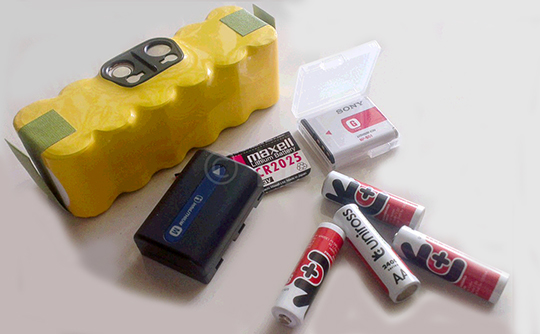
The large Sony NP-F970 battery will power the camera just about all day. You can save money by buying the excellent Pearstone NP-F975. I’m using 32 GB SDHC San Disk Cards for about $25 each. Some prefer the 64 GB card, but I feel safer with two smaller cards.
There’s also a very clever shoulder mount. It pulls out and while the weight distribution is not like the old style ENG cameras where the weight was evenly distributed so the camera can almost balance on your shoulder, this is a good attempt to make a better hand-held camera. Some people add small weights using the threaded sockets which are apparently just for that purpose.
The Cons
Like most reviewers of this camera, I am not thrilled with the kit lens, but it does fine. Just accept that this is a kit lens and the camera can use many other lenses. The 18- 200 power zoom kit lens has a 35mm-equivalent range of 27mm to 300mm. It’s slow, F 3.5 at its best, but it looks good. There are some sweet prime lenses and short zooms I am putting on my list. While the slow kit lens does not make for great low light shooting, a faster lens will help. At the same time this 18-200 kit lens is being grabbed up by still photographers at $548.00.
One big complaint is that the camera has no built-in ND filters! While it’s certainly not ideal, you can shoot outside in full sun if you stop down and increase the shutter speed. But gee whiz. It ain’t supposed to be that way. On the bright side, there is an Eclipse Genustech Neutral Density Fader Filter for about a hundred and sixty bucks I will be adding soon. This type of variable ND filter is simply two glass polarising filters sandwiched into the same filter mount. The more you rotate the darker it gets. In bright sunlight, you can limit the light that enters the lens. This allows you to get that classic shallow depth of field look on a sunny day.
The reason this camera does not have ND filters is that Sony decided a mechanical shutter for still photography was more important than NDs. If they had asked me, I would have said forget the still camera, give me NDs.
Conclusion
This is a unique camera that has an unusual, appealing look and does a good job. It evolved from both still and video cameras. For the money I am delighted with the results. I will post some sample footage soon. If you own this camera or are thinking about, I’d like to hear your comments or questions.
Itinerant Filmmaking
In the 1930s Texas-born filmmaker Melton Barker began to mass produce a short formula film that would star neighborhood kids which he charged their parents for. Barker would repeat this same script in numerous towns changing only the child actors. It was called “The Kidnappers Foil.” It was about a band of kids who outsmart two sleeping criminal. The kids then perform a series of song-and-dance routines.
It was a scam aimed at the unrealistic dreams of parents who believed their children could be stars no matter whether they had any talent. He continued the game for nearly 40 years. You can see some of the films at his web site. You can read more in the New York Times story The Legacy of a Camera-Toting Huckster.
Not all itinerant filmmakers were selling such shady ideas. Back in my New York documentary days we knew a filmmaker who made travel films, much like the old travelogues you’d see on weekend television. These were made on spec before the Internet. When he finished a film, he would book a local library, do some local advertising and sell tickets. These were silent films as sound cost a lot more to do. So he took his projector to the library or other venue then show the film while he did a live narration. His audience loved it. Then he’d take his projector, film reels and advertising materials and move on to the next town.
His travel films often featured more obscure corners of the planet. I’d bet an enterprising producer could do the same thing to day. People do it online as in the films you can watch through iTunes, Amazon, NetFlix, etc. But there’s something to be said to actually being with a live audience and interacting with them.
Filmmakers are doing similar things today such as Sam Green whose film ‘Utopia in Four Movements” can only be seen live. He narrates onstage, while a soundtrack and lyrical score are also performed live. Read about Sam Green’s film.
Incredible Movi Stabilizer, Game Changer?
The MōVI M10 is produced by Freefly Systems of Seattle WA. The device is a digital, 3-axis, gyro-stabilized camera gimbal. People are calling it a game changer, but it is just now in production. The device weighs less than 3 and a half pounds and can be operated solo, or with the help of a second operator.
It is an amazing stabilizer, but there’s a catch – it’s $15,000. A second, smaller version called the M5 is planned to sell for $7,500.
What about this invention 3 years ago by Adam Sidman?
Video Growing as Print Newspapers Decline
The NY Times, like nearly all newspapers is shrinking. A great many are already out of business. Jill Abramson, the executive editor of the NY Times recently sent this memo to her staff.
It says that the Times is shrinking its staff by offering many staffers buyout packages. At least this is better than laying people off. Rick Berke, currently an assistant managing editor, will now focus on video, an area the company has been trying to expand. Video is becoming an even bigger part of our news report. She goes on to say that video is deepening our ways of telling stories.
If you check out the home page of the NY Times, you will notice more video stories and although it is not clearly obvious, there are probably fewer print stories. I’m glad to see that video is growing in a good way. Video journalists typically shoot, edit and often presents their own stories. The times currently employs 12 video journalist most who come from a television and documentary background. As of 2005 the BBC has more than 600 of its staff trained as video journalists. I am both an avid newspaper reader as well as a video producer so this trend is bittersweet.
Apps for Filmmaking Android and iOS
Android Apps For Filmmakers
SL DigiSlate

A slate(clapboard) intended for use in professional film productions. Designed for anyone that needs a digital slate for their production. $9.99
Available from SL DigiSlate on Google Play
SL Director’s Viewfinder

This app is designed for directors and DP’s to block out and stage shots. $9.99 Available from SL Director’s Viewfinder on Google Play
DSLR Controller
DSLR Controller is the first and only app that allows you to fully control your Canon EOS DSLR from your Android device with only a USB cable. No computer or laptop required. $7.73 DSLR Controller on Google Play
Photo Tools

Includes: – DOF & Hyperfocal Distance Calculator, – Field Of View Calculator, – Time Lapse Calculator, – Timer, – Light Meter (using Camera & EXIF) and a ton more. Free
Photo Tools on Google Play
iOS Apps For Filmmakers
Shot Lister

Shot Lister can work from pre-production to the minute by minute decisions on set. It’s designed to deliver a solution that can build, organize, schedule and share shot lists digitally. $13.99
Shot Lister at iTunes Store
VisualDOF

Calculate and compare the depth of field of various f-stops at a glance. $4.99
VisualDOF at iTunes Store
MovieSlate® (Clapperboard & Shot Log)

All-in-one digital slate, clapper board, shot log, and notepad $24.99
MovieSlate at iTunes Store
Director’s Viewfinder
Works in much the same way as a traditional directors viewfinder but more accurately and with loads more features. Perfect for location scouting or making storyboards. Camera formats included.$29.99
Director’s Viewfinder at iTunes
Easy Way To Create 360 Degree Animations Of Products
Using just a smartphone, laptop or standard camera, you can easily make interactive animations like those below.
The subject can be a tabletop product, a person, or a car. The product can be rotated on a turntable or the camera can walk around the subject shooting as you go. If shooting a person, the app will even cue you to turn. All it takes is a smart phone (laptop or standard camera) and an easy-to-use app called YouSpin.
Download the free version for the
iPhone/iPadat iTunes.
Or
Android at the Google Play Store.
The lite version works great. If you want to do this as a business service, you may want the pro version. Both use the new HTML5 standards. As you probably know, HTML5 is the future of mobile browsing because it’s powerful and lightweight. Flash is on its way out.
The video below describes the process more.
You’ll want to take 8 or more shots. The more shots you take, the smoother the rotation. After you shoot, the photos are assembled almost instantly and then you can upload to your account at YouSpin or Facebook. From there you can embed the interactive 360 image into web pages.
You can also do panoramas with the Youspin app, in fact you can do 360 photography of anything.
Produce A Superbowl Doritos Ad and Win $1,000,000
Can you produce a very funny, action-packed or just awesome 30-second spot in the next couple weeks? If so, you could win a million bucks. But don’t delay. The deadline is one second before noon CT, Nov. 16, 2012. Your ad must be exactly 30 seconds and not use any copyrighted material or have been published elsewhere. Read the complete rules here. To enter, you must go to the official page on Facebook Click on the DORITOS Crash the Super Bowl Application. Agree to and allow the app. You’re allowed a total of ten submissions. There are prizes for $1,000,000, $600,000, $400,000 and five $25,000. The winner will also get to work with Michael Bay who directed Transformers.
Black Magic Cinema Camera – First Look
One of the first to receive a shipped camera is Rick Young. In this video, he shoots and explains the features as he goes.As he says, you can use just about any lens with the right adapter, but the Canon EF glass works right away, including auto focus and auto iris. Rick also explains how to easily work with the crop factor.
By taking us through the menus, he shows how easy the camera is work with. Not only is it simple, but there’s a nice big hi-res built-in monitor to work with. None of the menus have too many layers like many other cameras.
Rick is shooting and demonstrating the camera without reading the manual. That’s a good sign.
One thing Rick didn’t address is whether you can handhold this camera. Hand-holding a camera is not something I recommend you do often, but sometimes it’s the only way to get the shot. I did see on the B&H site there’s a hand-holding rig available, but it keeps all the weight out front.
I know that no has said this was a documentary camera. It’s always been touted as ideal for low budget features and commercials. I can imagine a rig that has weights and keeps the weight of the entire unit more on your shoulder rather than out in front where your arms will tire sooner. Since there’s no view finder, you couldn’t put your eye up against the monitor. So maybe you shouldn’t even think of it as a possible doc camera. What do you think?
Blackmagic Design Cinema Camera with 2.5K Image Sensor Under 3 Grand*
*Expected availability: August 30 2012, Lens not included.
At the 2012 NAB Show, the Blackmagic Design company announced the Blackmagic Cinema Camera, featuring interchangeable EF mount lenses. The 2.5K sensor allows enough oversampling for clean 1080p or 2K output. The sensor also offers a dynamic range of 13 stops! It captures to conventional PC 2.5″ SSD drives. (5 hours of video fits on a single 480GB SSD.) Record uncompressed RAW DNG, Apple ProRes or Avid DNxHD lossy formats. Most functions are available through the touchscreen display. The camera allows easy metadata entry. These features are remarkable because of the low price of this camera. You get a feature film look for the cost of a DV camera. Summary of specs:
2.5K Image Sensor
Captures 12-bit RAW, ProRes and DNxHD Formats
13 Stops of Dynamic Range
Frame Rates 23.98, 24, 25, 29.97, 30p
EF and ZE Lens Mount
LCD Touchscreen with Metadata Entry
SDI Video Output and Thunderbolt Port
Mic/Line Audio Inputs
Records to Removable SSD Drives (240GB is about $200)
Includes DaVinci Resolve and UltraScope
Uses standard connections for audio, batteries, headphones, Lanc remote control, and high speed Thunderbolt port for Apple computer capture.
Having thirteen stops of dynamic ranges means the detail in both shadows and highlights is preserved. So indoor shots that include a window can now be used with proper exposure for both the indoor subject and the exterior through the window. The RAW image can be color graded with the included DaVinci color grading software.
Entering Metadata is done through the LCD touchscreen. It displays a slate where you can enter shot number, search tags, scene number, time code and more. The shot number and other data can be set to increment automatically. Metadata speeds up the entire process of editing and keeps it much better organized.
DaVinci Resolve
DaVinci’s color correctors have been a standard for Hollywood color correction since the 1980s. The DaVinci company was acquired by Black Magic Design in 2009. DaVinci Resolve is normally $1500, but with the Cinema Camera, it is included free.
The Digital Bolex camera has many comparisons to the Blackmagic Cinema Camera. The Digital Bolex is also a 2K RAW Digital Cinema camera for $3K. And it is also slated to be available August, 2012. Which camera is first may not be the most important factor as those who recall the BetaMax/VHS wars of decades past.
This is the beginning of an entirely new generation of amazing video cameras. You that Sony, Panasonic, Canon and JVC will be working on competing cameras as well. But with these two cameras in our immediate future, one must ask if the DSLR is endangered?
DSLRs and High Dynamic Range Imaging (HDRI)
This can also be done with one camera such as Canon T2I with Magic Lantern.
High dynamic range imaging (HDRI) is a way to achieve a much higher contrast ratio (the range of values between light and dark areas) than normal photo techniques can typically achieve. The goal of HDRI is not to create an unnatural image, but one that accurately records the wide dynamic range of maximum black and the whitest white that occurs in one image.
For instance an image can have extreme contrast differences, but most photo and video technology cannot record these extreme differences. If you exposed for the darkest areas, you would over-expose the highlights and vice versa. Choosing what to expose properly and what to let go – ether under or overexpose is a judgement call of the photographer and is an important element of the art of photography. It applies equally to cinematography and videography.
If you took one photograph and exposed for the darkest areas and then from the same vantage point you took more photos and exposed for the lighter areas and selectively superimposed these photos into one image, you would get an image with remarkable dynamic range. So instead of allowing the windows to “blow out” or overexpose while keeping the room properly exposed, you can do both. This was the old way of doing this by combining the different shots in Photoshop or another program after the fact.
Taking different exposures with differing f-stops is called bracketing and is a time-tested technique in photography. Instead of taking three separate photos, each exposing for a different light value, today’s DSLRs can do this automatically. By taking just one shot, the camera will automatically take several different shots at different exposures.
Is it cheating? Well, perhaps in the same way that auto focus and auto iris are also cheating, not to mention all the other auto functions in today’s cameras. It’s really just another tool at your disposal.
Video
While most video camcorders cannot process multiple images for each frame, the Red camera and Arriflex have both been working on digital sensors that can capture HDR video. The operator can choose 1 to 3 stops an additional contrast range. This gives them lots more options in post for beautiful images.
In the more affordable arena, DSLRs can capture multiple images per frame if the rate is much less than 30 frames per second. Time lapse video fits that bill because it has typical frame rates of 1 frame per second and less.
As TV sets are now featuring enhanced dynamic range, it won’t be long before TV and other video applications will find it commonplace.
© 1997 - 2013 Oak Tree Press. All rights reserved.